 Monmore dogs
 GBGB and Greyhound Racing Regulation in the UK
 Available in US
How the GBGB regulates UK greyhound racing. Track licensing, drug testing, welfare standards, retirement schemes and why regulation matters for punters at Monmore.
What Is the GBGB?
The Greyhound Board of Great Britain governs licensed racing. Every official greyhound race at Monmore — every result you see on Timeform, every racecard on At The Races, every Starting Price published by a bookmaker — runs under GBGB authority. The Board is the regulatory body responsible for the rules of racing, the licensing of tracks and personnel, the welfare of racing greyhounds, and the integrity of the sport across all licensed venues in England, Scotland, and Wales.
The GBGB was established in 2009 as a successor to the National Greyhound Racing Club, which had governed the sport since 1928 — the same year Monmore Green first opened its doors. The transition from the NGRC to the GBGB modernised the governance structure, bringing greyhound racing’s regulatory framework closer to the standards expected of a professional sport with significant betting turnover. The GBGB operates as an independent body, funded by a levy on bookmaker revenue generated from greyhound racing, and it employs a team of stipendiary stewards, veterinary officers, and integrity officials who attend every licensed meeting.
For the average punter, the GBGB’s most visible role is maintaining the official results database and the rules under which races are conducted. When a result is published, it has been verified by GBGB officials present at the track. When a dog is disqualified, it’s a GBGB stewards’ decision. When a trainer is sanctioned for a rules breach, the GBGB’s disciplinary process is responsible. The Board’s authority runs through every aspect of licensed greyhound racing, from the moment a dog is registered to the moment it retires.
Understanding that Monmore operates within this framework matters because it provides the foundation of trust on which the entire betting market rests. The odds you see, the results you check, and the form data you analyse all assume that the racing is conducted fairly and under consistent rules. The GBGB is the institution that enforces that assumption.
How Tracks Like Monmore Are Regulated
Licensing, inspection, welfare — the framework behind every race. Monmore Green operates under a GBGB track licence, which is not a one-time accreditation but an ongoing regulatory relationship with conditions that must be continuously met.
The track licence requires Monmore to maintain its facilities to specific standards: the racing surface must be properly maintained and regularly assessed, the trapping system must be certified, the timing equipment must be calibrated, and the kennel and veterinary facilities must meet the GBGB’s welfare requirements. Inspections are conducted both on a scheduled basis and without prior notice. A stipendiary steward — a professional official employed by the GBGB — attends every racing meeting at Monmore to oversee the conduct of the races, adjudicate on any incidents, and ensure compliance with the rules of racing.
Personnel licensing extends beyond the track itself. Trainers who race dogs at Monmore must hold a GBGB trainer’s licence, which requires them to meet standards of kennel management, dog welfare, and professional conduct. Kennel inspections are part of the licensing process. Racing staff — handlers, kennel hands, and other operational personnel — are also registered with the GBGB, creating a chain of accountability from the kennel to the track.
Integrity measures include drug testing of dogs, both random and targeted. Samples are taken from winners and from other runners selected by the stewards, and they are tested for prohibited substances at approved laboratories. The presence of any banned substance results in disqualification of the dog, potential sanctions for the trainer, and referral to the GBGB’s disciplinary committee. This testing regime is the primary mechanism for ensuring that results at Monmore reflect genuine athletic performance rather than chemical enhancement.
The regulatory framework is not perfect, and it has faced criticism on various grounds over the years. But its existence means that every race at Monmore is conducted under a set of enforceable rules, overseen by independent officials, and subject to a testing and inspection regime that provides a meaningful level of integrity assurance. For punters, that’s the foundation on which informed betting is built.
Dog Welfare Standards and Retirement
Welfare is the industry’s most scrutinised area. Greyhound racing has faced sustained public debate about the treatment of racing dogs, and the GBGB’s welfare standards represent the industry’s response to that scrutiny. Whether you believe those standards are sufficient is a matter of individual judgement, but knowing what they are is important for anyone engaging with the sport.
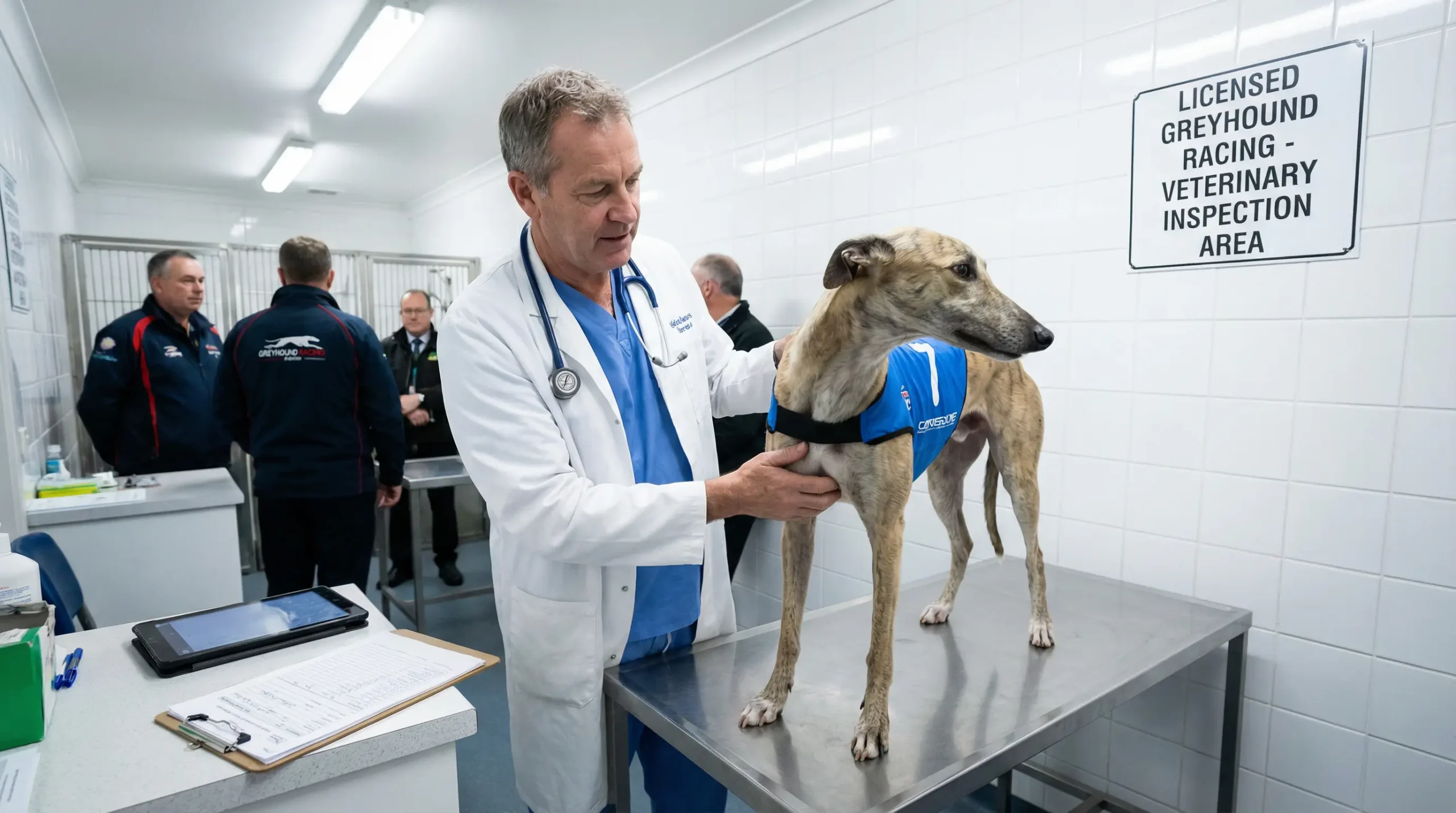
The GBGB mandates minimum welfare standards for all racing greyhounds at licensed tracks, including Monmore. These cover housing, exercise, nutrition, veterinary care, and the conditions under which dogs are transported to and from the track. On race day, every dog is inspected by a GBGB-approved veterinary surgeon before being allowed to race, and a veterinarian is present trackside throughout the meeting to provide immediate treatment in the event of injury.
Retirement and rehoming is the area that attracts the most public attention. When a greyhound’s racing career ends — whether through age, injury, or declining performance — the dog needs a home. The GBGB operates the Greyhound Retirement Scheme, which tracks the destination of every retired racing greyhound and requires trainers to provide documented evidence of responsible rehoming. Partner charities, including the Greyhound Trust (formerly the Retired Greyhound Trust), facilitate the placement of former racing dogs into domestic homes.
The numbers have improved significantly over the past decade. Rehoming rates for retired racing greyhounds have increased year on year, and the GBGB publishes annual welfare data that tracks outcomes for every dog leaving the licensed racing population. The system is not without gaps — welfare campaigners argue that some dogs still fall outside the tracking system — but the trajectory is toward greater transparency and accountability.
For punters, the welfare dimension is relevant in two ways. First, it shapes the broader social licence under which greyhound racing operates. If welfare standards deteriorate, public and political pressure could lead to increased regulation or restrictions that affect the sport’s viability. Second, the GBGB’s welfare regime directly affects racing quality: dogs that are well cared for, properly conditioned, and racing within their physical limits produce more consistent form data. Welfare and competitive integrity are not separate concerns — they reinforce each other.
Why Regulation Matters to Punters
Regulated racing means regulated results. That connection is the bottom line for anyone who bets on greyhound racing at Monmore, because the entire value of form analysis, odds comparison, and betting strategy depends on the assumption that races are conducted fairly and that results reflect genuine performance.
Without regulation, there would be no reliable way to trust that a dog’s finishing time reflects its true ability. Drug testing ensures that performances are achieved without prohibited substances. Trap certification ensures that every dog leaves the traps at the same moment. Timing calibration ensures that the recorded times are accurate. Stewards’ oversight ensures that interference, bumping, and other incidents are noted and factored into the official record. Each of these elements supports the data that punters use to make their selections.
The GBGB’s integrity unit specifically monitors betting patterns across all licensed meetings, including Monmore. Unusual betting activity — a sudden, large movement on a dog’s odds, or a pattern of results that deviates from expected probabilities — triggers investigation. While no system is infallible, the monitoring creates a deterrent against manipulation that protects both the sport and the betting public.
From a practical perspective, regulation also means standardisation. The rules of racing are the same at Monmore as at every other GBGB-licensed track. Grading systems follow a common framework. Results are published in a standard format. Form data is compiled to consistent specifications. This standardisation makes cross-track comparison possible, allows national form databases to function, and gives punters a common language for discussing and analysing greyhound racing across the entire licensed circuit.
Punters who bet on unlicensed or independent greyhound meetings — known as flapping tracks — operate without any of these protections. There is no GBGB oversight, no drug testing, no standardised grading, and no reliable results database. The contrast with licensed racing at Monmore is stark, and it underlines why the regulatory framework, for all its imperfections, provides the bedrock on which serious greyhound betting is built.
Understand GBGB regulation on the monmoredogsresults homepage.
See how grading fits within regulation in grading system.
