 Monmore dogs
 Monmore Dogs Results: Track Guide, Tips Race Data
 Available in US
Latest Monmore greyhound results, track records, race distances, trap stats and betting tips. Your complete guide to racing at Monmore Green Stadium.
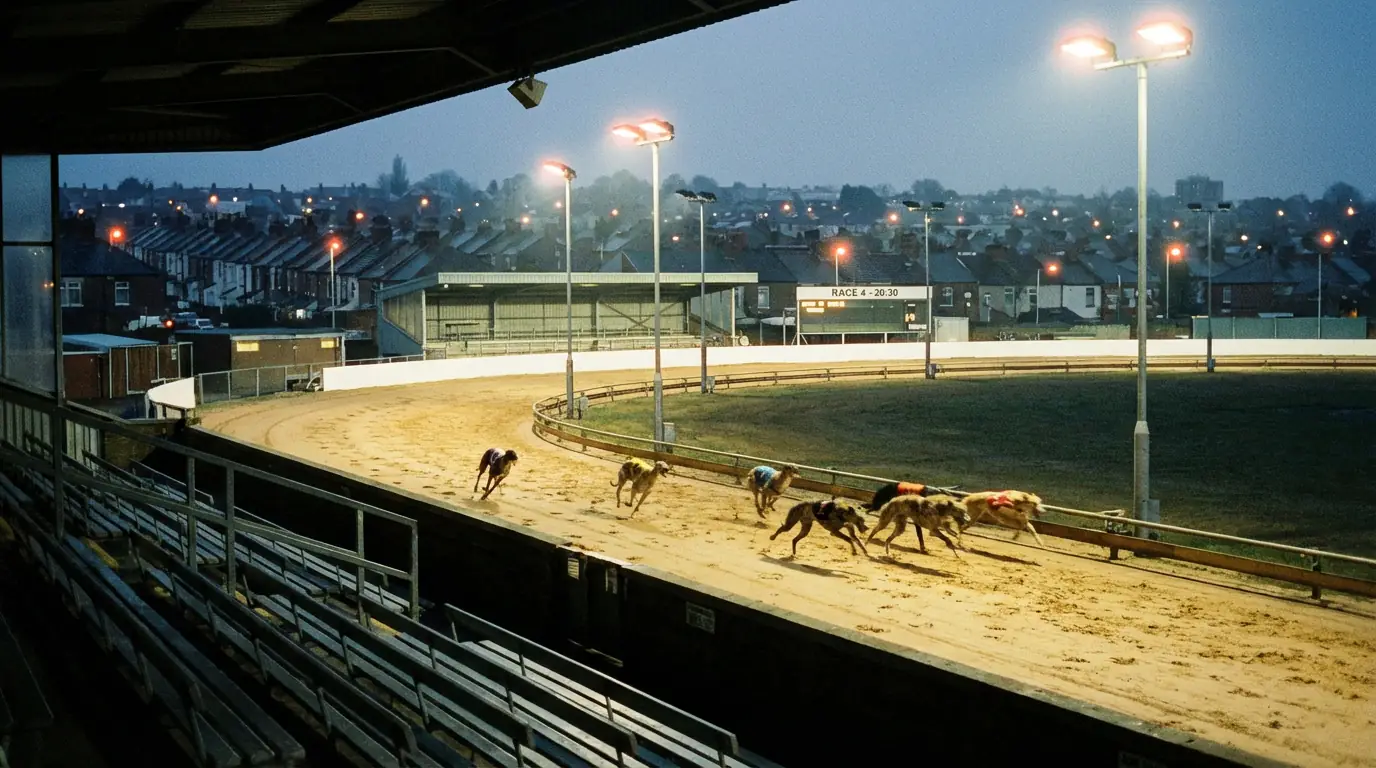
Monmore Green: Where Wolverhampton Meets the Track
The traps snap open on Sutherland Avenue four nights a week, and the dogs run the same 419-metre oval they have run since 1928. Monmore Green Stadium sits in the Monmore Green area of Wolverhampton, a compact greyhound venue wedged between residential streets and the Willenhall Road corridor. It is not a destination stadium in the way Towcester or Romford might claim to be. It is a working track, and that is precisely what makes it useful to anyone serious about greyhound racing in the Midlands.
Owned and operated by Entain (the parent company behind Ladbrokes and Coral), Monmore runs a full racing programme across both BAGS afternoon meetings and evening cards broadcast via SIS and Racing Post Greyhound TV. In the 2026 season the fixture list covers four or more meetings per week, making it one of the busiest tracks in the GBGB-licensed circuit. The capacity is around 1,150, the floodlights are functional rather than glamorous, and the grandstand is a survivor of multiple refurbishments rather than a single architectural statement. None of that matters to the punter studying the racecard. What matters is the data the track produces, and Monmore produces a lot of it.
This guide covers everything that data contains. From understanding how Monmore results are structured and what each column on the racecard means, through the distances raced and the trap biases embedded in the track geometry, to the betting markets, form analysis and major events that define the Monmore calendar. Whether you are checking tonight's results or building a systematic approach to betting on Wolverhampton greyhounds, the information here is designed to make every result line readable and every race more transparent.
Monmore Green at a glance
Track circumference: 419 metres. Location: Sutherland Avenue, Wolverhampton WV2 2JJ. Owner: Entain plc. Capacity: approximately 1,150. Racing: four or more meetings per week (BAGS afternoons and evening cards). Race distances: 264m, 480m, 630m, 684m, 835m, 900m. Run to first bend: 103 metres. Hare system: Outside Swaffham hare. Licensed and regulated by the GBGB.
How Monmore Dogs Results Are Structured
Every Monmore result card compresses twelve variables into a single line, and if you cannot read that line you are betting blind. The results data published after each race follows a standardised format used across all GBGB-licensed tracks, but the specifics of what appears and how to interpret it are worth walking through carefully, because the difference between a casual glance and a proper reading is often the difference between a losing bet and a considered one.
A standard result entry for a Monmore race includes the finishing position, trap number, dog name, trainer, starting price (SP), finishing time, sectional time to the first bend, weight carried, the race grade, and a set of abbreviated running comments that describe what happened during the race. The CSF (Computer Straight Forecast) and tricast dividends are published below the individual runner data. Each of these elements tells a distinct part of the story, and serious form readers learn to process them in combination rather than isolation.
SP (Starting Price) — the final official odds at the moment the traps open, as declared by the on-course market or bookmaker consensus. The SP is the benchmark against which all pre-race prices are measured.
The order in which you read the data matters. Start with the finishing position and time to establish the outcome. Then check the trap number and sectional time to understand how the race unfolded in its opening phase. Then read the comments to identify whether the finishing position reflects the dog's true ability or was distorted by interference, crowding or a poor start. Only after all of that should you look at the SP, because the price is meaningless without context.
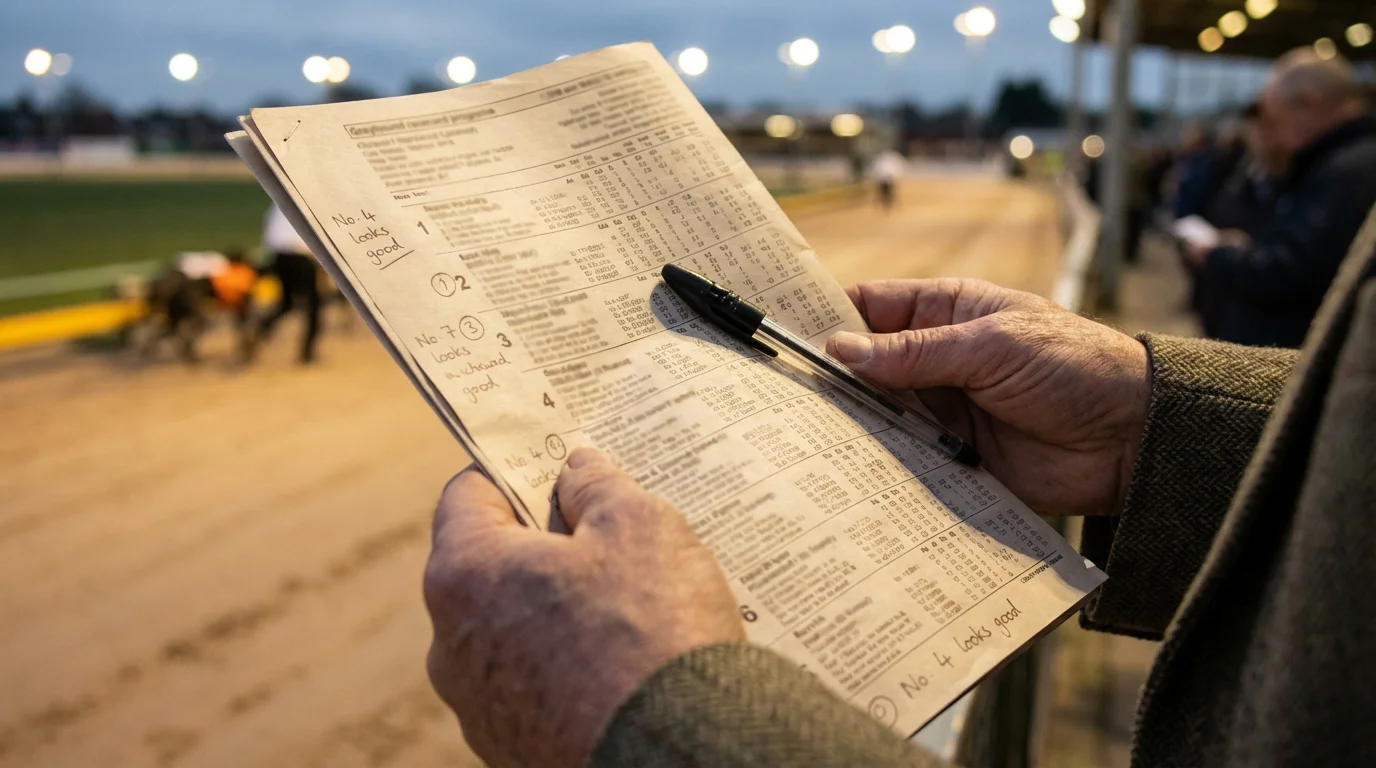
Reading the Race Card: Traps, Times and Positions
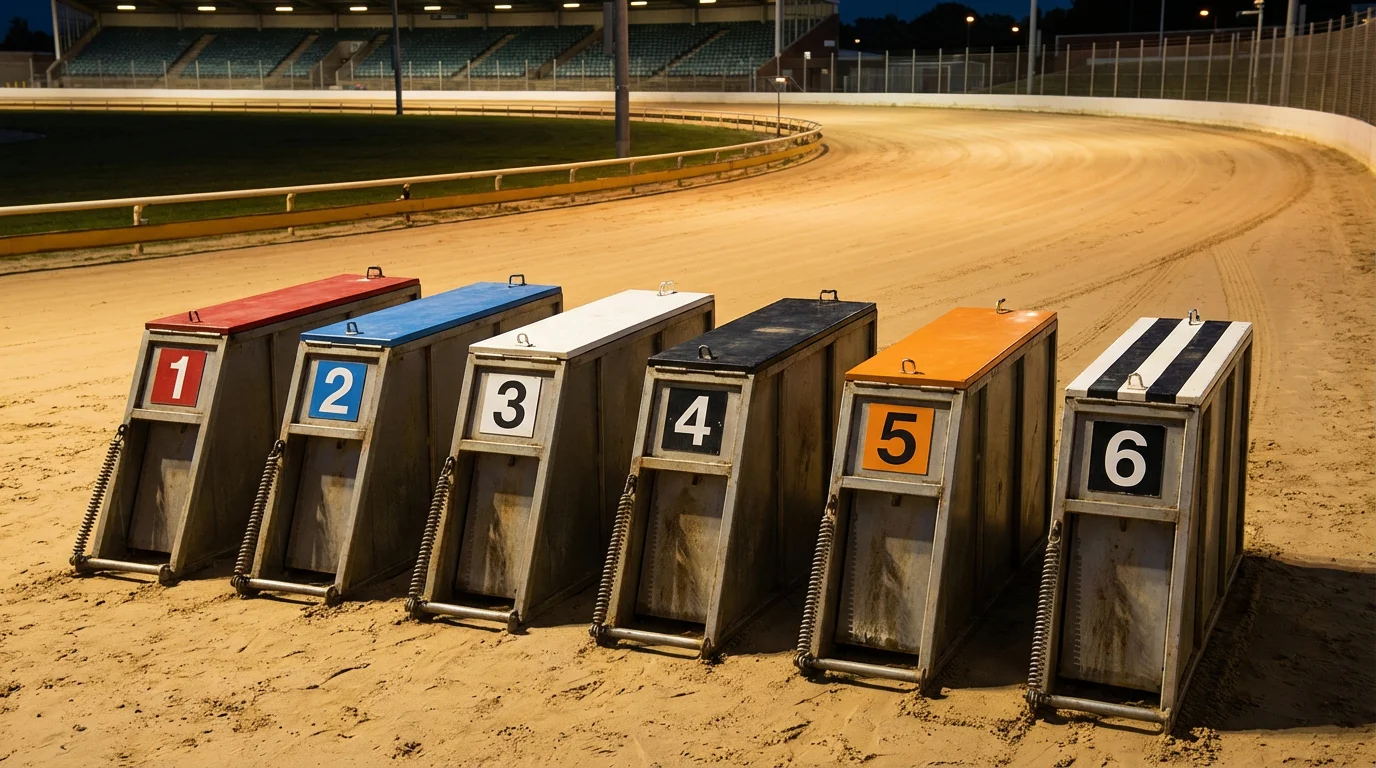
Trap colours are not decoration. They are the fastest way to identify a dog during a race, and the trap number itself is one of the most consequential pieces of pre-race information you will encounter. Monmore uses the universal GBGB trap colour system: trap 1 is red, trap 2 blue, trap 3 white, trap 4 black, trap 5 orange, and trap 6 is black and white stripes. The numbering runs from the inside rail outward, so trap 1 sits closest to the rail and trap 6 is widest.
🐾 Monmore · Result Decoder
Formanalyse & Fair Odds
Ein Ergebnis-Card enthält zwölf Variablen – Finishing Position, Trap, SP, Sectional Time, Running Comments und mehr. Gib die wichtigsten Daten ein – der Rechner zeigt, ob der Hund echte Form hat oder ob das Ergebnis ein Zufall war.
The finishing position is listed as a simple numeral, one through six. A dog that finishes first from trap 3 will appear as position 1, trap 3 in the results. What most newcomers miss is that the raw finishing position tells you almost nothing without the grade context. Finishing third in an A1 race at Monmore is a stronger performance than winning an A7, because the quality of opposition is fundamentally different. Always cross-reference the position against the grade, which is listed in the race header.
The finishing time is recorded in seconds and hundredths, measured from trap opening to crossing the finish line. At Monmore, a standard 480m race is typically completed in 29 to 30 seconds at A3 level, faster in higher grades, slower in lower ones. The time alone is useful for comparing dogs within the same race, but comparing times across different meetings requires adjustment for track conditions, which we cover in the going conditions section below.
Sectional Times and What They Reveal
The clock at the first bend is where races are really won. The sectional time — the time from trap opening to the first timing point, located at or just past the first bend — isolates the most critical phase of any greyhound race. At Monmore, the run from the traps to the first bend covers approximately 103 metres, and this distance compresses the entire field into a narrow corridor where position at the turn determines the shape of the race.
A dog that records a fast sectional but finishes fourth or fifth has almost certainly been impeded after the first bend. The sectional tells you it broke well and reached the turn in a strong position; the finishing position tells you something went wrong afterwards. That dog is potentially better than its result suggests, and its next race from a more favourable draw could produce a very different outcome. Conversely, a dog with a slow sectional that wins may have inherited the lead after the pace dogs collided at the first bend. The win is real, but the route to it was circumstantial.
When analysing a race at Monmore, line up the sectional times of all six runners. The dog with the fastest sectional from the most favourable trap draw is statistically the most likely leader at the first bend, and at Monmore the first-bend leader converts at a rate well above the one-in-six baseline that random chance would produce. This is the single most predictive metric available from the results data.
Race Distances at Monmore Green
Not all 480-metre races are equal, and not all Monmore races are 480 metres. The track offers six distinct distances, ranging from the 264-metre sprint to the 900-metre marathon, and each distance produces a fundamentally different type of race with different demands on the dogs, different form patterns, and different betting dynamics. Understanding which distance you are looking at is the first step in making any Monmore result line meaningful.
The majority of racing at Monmore takes place over the standard 480-metre trip, which covers four bends and forms the backbone of the GBGB grading system. Sprint races over 264 metres are the shortest and most explosive, decided almost entirely by trap speed and the break from the boxes. Middle distances of 630 and 684 metres introduce stamina as a factor, while the 835 and 900-metre staying trips are endurance tests where pace judgement and the ability to sustain speed through six or more bends matter more than raw acceleration.
264m Sprint
2 bends. Approx. 16 seconds. Trap draw dominant. Pure speed.
480m Standard
4 bends. Approx. 29 seconds. Core graded distance. Balanced speed and positioning.
630m Middle
5 bends. Approx. 39 seconds. Stamina becomes a factor. Pace judgement required.
835m Staying
7 bends. Approx. 53 seconds. Endurance and tactical positioning. Class sorts itself over distance.
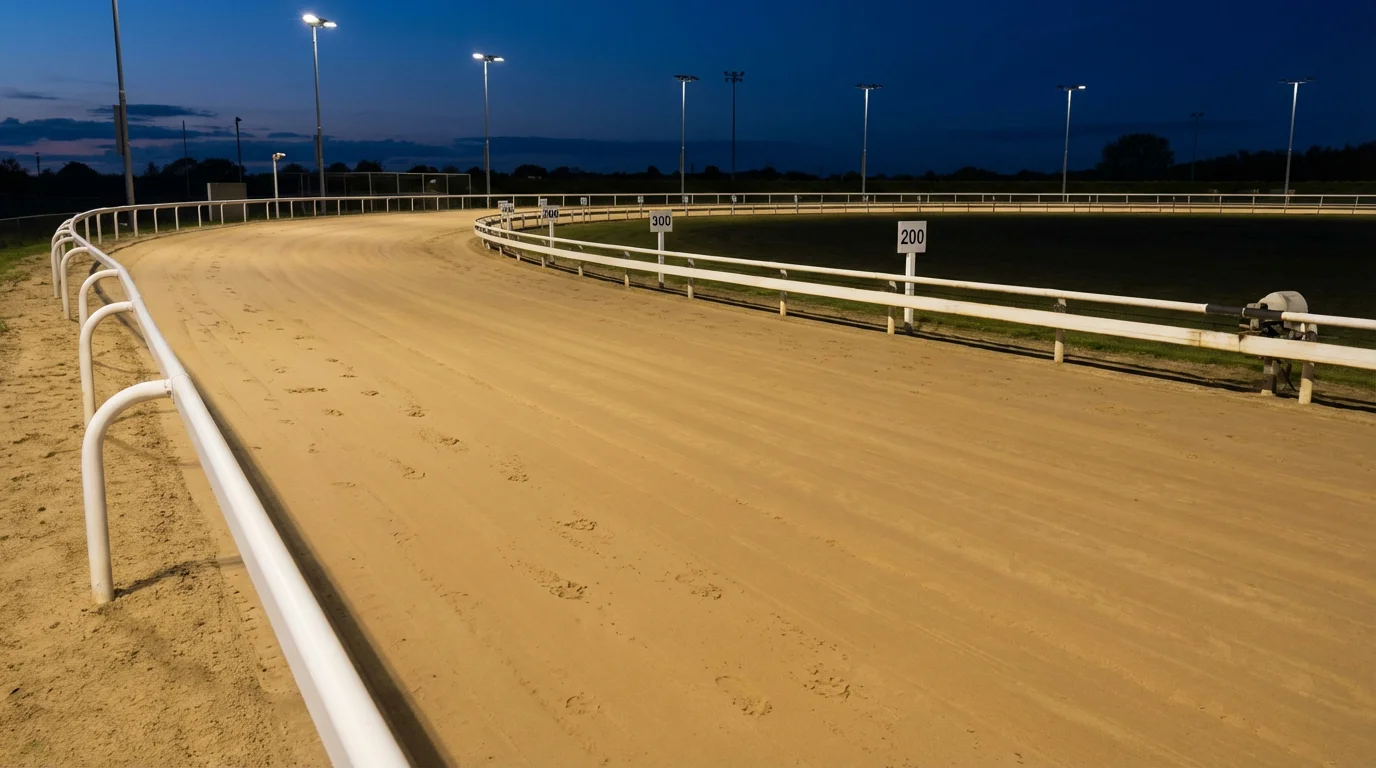
Sprint Races: 264 Metres
Two bends. No margin for error. The 264-metre sprint at Monmore is the most compressed race distance in British greyhound racing, and the outcome is determined almost entirely by what happens in the first four seconds. The dogs break from traps positioned close to the first bend, and the inside draw is so advantageous that trap 1 sprint records are consistently faster than trap 6. If your dog does not lead into the first turn, it is almost certainly not going to win. Sprint form from Monmore does not transfer reliably to standard-distance races, and vice versa. Treat them as separate sports.
Standard Distance: 480 Metres
The bread and butter of British greyhound racing, and the distance that produces the most data, the deepest form book, and the most competitive graded racing at Monmore. Four bends, approximately 29 seconds, and a race shape that rewards both early pace and the ability to hold position through the back straight. The 480-metre results at Monmore are the most useful for form comparison because the volume of races at this distance creates a large enough dataset for patterns to be meaningful. When people refer to Monmore form, they almost always mean 480-metre form.
Grading at Monmore runs from A1 (highest) through A11 (lowest) over the standard distance, with open races sitting above the graded system. A dog's grade is determined by its recent times over 480 metres at the track, and movement between grades — promotion after fast times, relegation after slow ones — is the primary mechanism that keeps races competitive. The GBGB revised its grading parameters for the 2026 season to ensure tighter competitive bands, which means grade context is even more critical when reading current Monmore results. Understanding where a dog sits in the grading ladder, and whether it is moving up or down, is essential to reading any 480-metre result.
Middle and Staying Distances: 630m to 900m
Where stamina separates contenders from pretenders. Monmore's longer distances — 630, 684, 835 and 900 metres — are raced less frequently than the standard trip, but they attract specialist stayers whose form over shorter distances is often a poor guide to their ability over these trips. The 630-metre race adds a fifth bend and roughly ten seconds of additional running, which is enough to expose dogs that lack the constitution to maintain speed beyond the standard four-bend trip.
The 835 and 900-metre marathons are the province of dedicated stayers, and these races appear on the card for specific events and open competitions rather than as part of the regular graded programme. Results at these distances reward patience in more than one sense — the dogs that win tend to be those that settle into a rhythm rather than sprint from the start, and the punters who profit tend to be those who have built a separate form book for staying races rather than extrapolating from 480-metre data.
Trap Draw and Track Bias at Monmore
Trap 1 at Monmore sits 103 metres from the first bend, and that number shapes everything. The run to the first turn is where the six-dog field compresses from a horizontal starting line into a single-file sequence dictated by speed, draw position and racing line. At Monmore, the relatively short run-up means inside-drawn dogs have a measurable structural advantage: they reach the bend first by geometry alone, before any question of speed is settled. The outside traps must cover more ground through the turn, and any delay in breaking from the boxes is amplified by the tight approach.
The data supports what the geometry predicts. Across standard 480-metre races at Monmore, trap 1 and trap 2 consistently produce higher win rates than the outside traps. The effect is most pronounced in sprint races over 264 metres, where the run to the first bend is an even larger proportion of the total race distance. In staying races the bias is diluted — more bends and more distance allow dogs drawn wide to recover position — but it never disappears entirely. The first bend remains the decisive moment, and the trap draw is the one variable fixed before the lids open.
This does not mean trap 1 always wins. It means that a dog drawn in trap 1 starts with a positional advantage that the market does not always price correctly. The edge for the bettor is in identifying dogs whose running style aligns with their drawn trap. A confirmed railer — a dog that naturally hugs the inside rail — drawn in trap 1 is in its optimal position. The same dog drawn in trap 5 faces a fundamentally different race, needing to cross traffic to reach the rail while other dogs are already establishing position.
Calculating trap advantage from recent data
Step 1: Identify the dog's preferred running style from recent comments. Look for keywords: RIs (rails), Mid (middle runner), W (wide). A dog showing RIs in four of its last six runs is a confirmed railer.
Step 2: Check the drawn trap. If the railer is drawn in trap 1 or 2, the draw supports the running style. If drawn in trap 5 or 6, there is a structural mismatch.
Step 3: Compare the dog's sectional times from favourable draws (traps 1-2) versus unfavourable draws (traps 5-6). A railer that records a 5.42-second first-bend sectional from trap 1 but 5.68 from trap 5 is losing approximately two lengths before the race is ten per cent over.
Step 4: Assess the market price. If the dog is drawn favourably and the market has not shortened the odds to reflect the draw advantage, there is potential value. If the market has already compressed the price, the edge is reduced.
Understanding Monmore Greyhound Odds
Odds are a market, not a prediction. The prices attached to each dog before a Monmore race represent the aggregate of all money placed — by on-course punters, online bettors, and the bookmakers' own traders — and they shift as the balance of opinion changes. A dog that opens at 3/1 and drifts to 5/1 before the off has seen money move away from it, which might reflect late information (a poor trial, a weight change) or simply a market correction. A dog that shortens from 5/1 to 3/1 is attracting support. Neither movement tells you whether the dog will win. Both tell you something about what the market believes.
At Monmore, odds are available through multiple channels. On-course, the tote and any on-track bookmakers offer prices. Online, the major operators — Ladbrokes, Coral, bet365, William Hill, Betfair and others — open markets typically thirty to sixty minutes before each race. The prices move independently across platforms, which means the odds you see on one site may differ from another. For the same race, Ladbrokes might offer 4/1 on trap 3 while bet365 shows 9/2. This variation is normal and is one of the reasons serious punters compare odds before committing.
Sample Monmore Race: 480m A3
Win bet — Trap 2 at 5/1: A five-pound stake returns thirty pounds (twenty-five profit plus five stake) if Trap 2 wins.
Forecast — Trap 2 first, Trap 4 second at 28/1: A one-pound stake returns twenty-nine pounds if those two dogs finish in that exact order.
Tricast — Traps 2-4-1 in order at 150/1: A one-pound stake returns one hundred and fifty-one pounds if all three dogs finish in the predicted sequence.
Fractional vs Decimal Odds Explained
If 5/1 looks like a foreign language, the conversion is straightforward. Fractional odds show profit relative to stake: 5/1 means five pounds profit for every one pound wagered. Decimal odds show the total return including stake: the same price expressed as 6.0 means a one-pound bet returns six pounds total. UK greyhound racing traditionally uses fractional odds at the track and on most domestic bookmaker sites, but decimal odds are available on all major platforms and are standard on exchanges like Betfair.
The conversion formula is simple. To turn fractional odds into decimal, divide the first number by the second and add one. So 5/1 becomes (5 divided by 1) plus 1 equals 6.0. For 5/2, it is (5 divided by 2) plus 1 equals 3.5. For 11/8, it is (11 divided by 8) plus 1 equals 2.375. The implied probability — the chance the odds suggest — is calculated as 1 divided by the decimal odds. At 6.0, the implied probability is 16.7 per cent. At 3.5, it is 28.6 per cent. When the implied probabilities of all six dogs in a race add up to more than 100 per cent, the difference is the bookmaker's margin.
Starting Price vs Early Price: When to Take the Odds
The price you see at 6pm is not the price you will get at post time. The starting price (SP) is the official odds at the moment the traps open, recorded by on-course assessors or the bookmaker's own system. If you take an early price — placing your bet when the market first opens — you are locked in at that price regardless of how the market moves. If you bet at SP, you get whatever the final price turns out to be, which could be shorter or longer than the price available when you first looked at the race.
The strategic question is when early prices offer value. If you have strong form opinions and identify a dog whose price is likely to shorten as more money comes in, taking the early price secures a better return. If you are less certain and the market is volatile, waiting for SP avoids the risk of locking in a price that the market subsequently lengthens. Many major UK bookmakers offer Best Odds Guaranteed (BOG) on greyhound racing, which pays the higher of your early price and the SP — a feature that removes the downside of taking an early price, since you cannot end up worse off than the SP. When BOG is available, there is almost no reason not to take an early price on a dog you fancy.
Key Bet Types for Monmore Racing
From odds to action — here is how to put your selection to work.
Six dogs, dozens of combinations. The betting markets on a Monmore race offer far more options than simply picking the winner, and understanding what each bet type demands — and what it pays — is essential to managing your staking intelligently. The range runs from the simplest single-dog wager to exotic multiples that require predicting exact finishing orders, and each tier of complexity brings a corresponding increase in potential reward and a proportional decrease in probability.
Every bet type available at Monmore follows GBGB-standard rules, meaning the same structure applies whether you are betting on-course, through a Ladbrokes shop, or on a mobile app. The prices and dividends may vary by platform, but the mechanics are universal.
Win, Place and Each-Way Bets
Start here. One dog. One call. The win bet is the simplest wager: pick the dog you believe will finish first. If it does, you collect your stake multiplied by the odds. If it does not, you lose your stake. In a six-runner field, the arithmetic is unforgiving — a dog at even money needs to win more than half its races to be profitable over time, and the favourite in a typical graded race at Monmore wins roughly thirty to thirty-four per cent of the time. Blind favourite-backing is a losing strategy at any track.
A place bet requires your dog to finish first or second. The returns are lower because the probability is higher, and place odds are typically one-quarter of the win odds for greyhound racing. An each-way bet combines both: it is two separate bets on the same dog, one to win and one to place, at a total cost of double your stated stake. A five-pound each-way bet costs ten pounds. If the dog wins, both parts pay out. If it finishes second, you lose the win part but collect on the place part. Each-way betting makes most sense at odds of 4/1 or higher, where the place return is large enough to cover most or all of the combined outlay on a second-place finish.
Forecast and Tricast: Higher Risk, Higher Reward
Picking two in order is hard. Three is harder. A straight forecast requires you to predict the first and second finishers in the exact order. A reverse forecast covers both possible finishing orders between your two selections and costs twice the stake. The forecast dividend at Monmore is calculated by the Computer Straight Forecast (CSF) system, which determines the payout based on the SPs of the first two dogs. A typical CSF at Monmore for two mid-priced runners might pay anywhere from fifteen to forty pounds to a one-pound stake, though outsiders filling the places can push dividends significantly higher.
A tricast extends the challenge to three dogs in exact finishing order — first, second and third. The payouts can be substantial because the number of possible permutations in a six-dog race is large (120 possible ordered trios), and getting three right in sequence is genuinely difficult. Combination tricasts cover all possible orders of your three selected dogs (six permutations at six times the unit stake) or four or more selected dogs (increasing the permutations and cost proportionally). The tricast is not a regular betting instrument for most punters. It is a high-variance, low-frequency play that rewards conviction about specific dogs in specific races.
Monmore Form Analysis: How to Spot a Winner
Form is not history — it is trajectory. The form figures attached to every dog on a Monmore racecard represent its recent finishing positions, and reading them properly means looking at direction rather than absolute position. A dog whose last six finishes read 5-4-3-2-1-2 is improving. A dog that reads 1-1-2-3-4-5 is declining. The raw numbers are the same set of digits, but the sequence tells entirely different stories, and the market often prices both dogs similarly because casual punters average the figures rather than reading the trend.
Effective form analysis at Monmore combines four elements: recent finishing positions, sectional times, grade context, and running comments. No single element is sufficient. A dog that finished first in its last three races looks impressive until you notice it did so in A8 grade and has just been promoted to A5, where the opposition will be materially faster. A dog that finished fourth three times running looks poor until you read the comments and discover it was crowded at the first bend in all three races from wide draws, and tonight it is drawn in trap 1.
Recent form at the same track and distance carries more weight than overall record. A dog that has won three of its last five 480-metre races at Monmore is a stronger proposition at Monmore over 480 metres than a dog that has won five of five at other tracks. Track-specific form accounts for surface, geometry, and the particular timing of Monmore's first bend. Cross-track comparisons require adjustment that most punters do not bother to make.
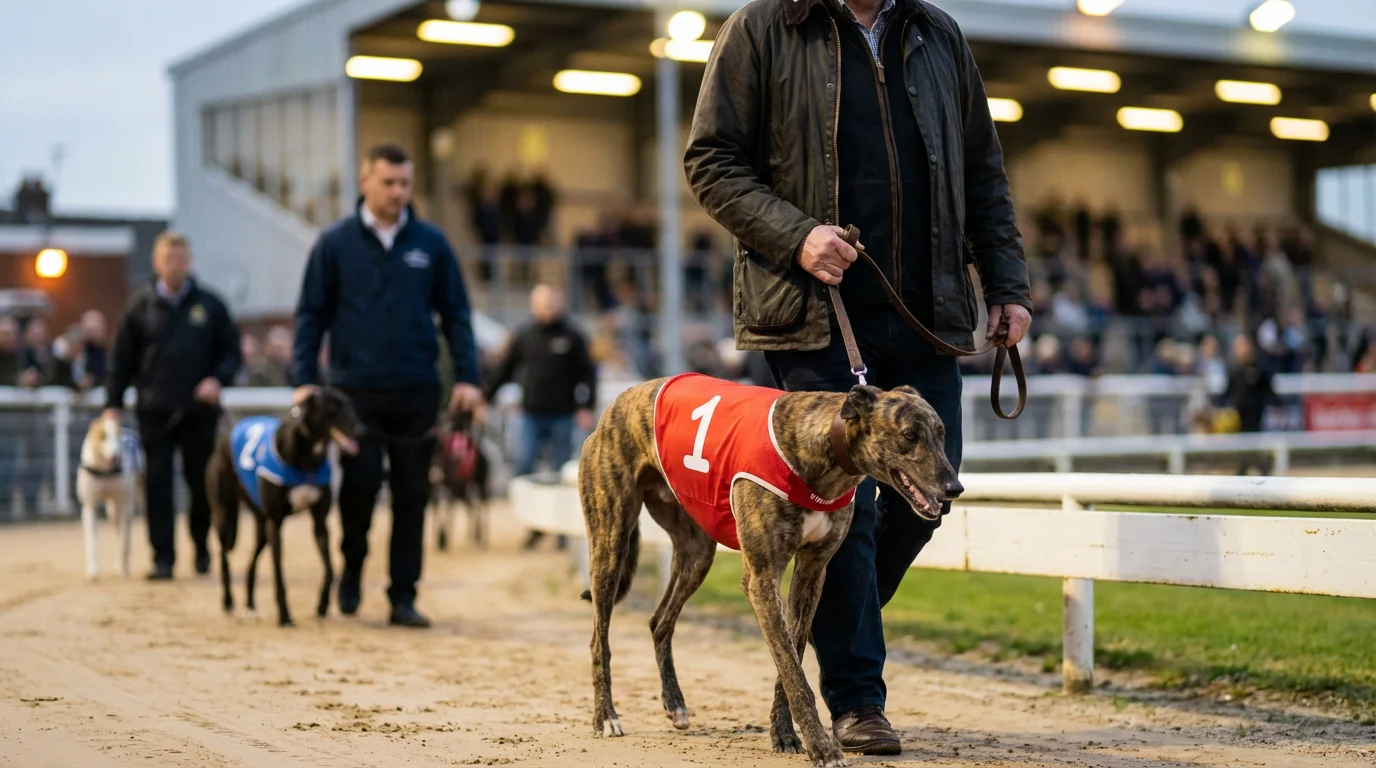
Recent Form Figures: What the Numbers Mean
A sequence of 1-3-2-5 tells a story, but only if you read it from left to right as a timeline. The most recent run is on the right, and the oldest is on the left. So 1-3-2-5 means the dog won four races ago, finished third, then second, and most recently finished fifth. The immediate question is why the decline — was it a grade rise, a bad draw, interference, or genuine loss of form? The answer is in the comments and the grade indicators alongside the figures.
Form figures are sometimes displayed with letters appended. A 'd' typically indicates a different distance, 'h' a hurdle race, and numbers in parentheses may indicate the number of lengths behind the winner. Some results services show trap numbers alongside finishing positions, which allows you to assess the interaction between draw and result at a glance. The critical discipline is never to take form figures at face value. A dog showing 6-5-4 might look hopeless, but if all three runs were in A2 grade from trap 6 and tonight it drops to A4 from trap 1, the entire profile changes.
Trainer Patterns and Kennel Form
Some trainers peak their dogs for specific nights. This is not a conspiracy theory — it is a practical reality of kennelling, trialling, and race selection. A trainer who enters a dog for a Tuesday BAGS meeting after it has run twice in the previous week is probably using that run as fitness conditioning rather than a serious race. The same dog rested for ten days, given a trial on Thursday, and entered for a Saturday evening card is being aimed at a target. Trainer intent is not published in the racecard, but it can be inferred from the pattern of entries, rest intervals, and distance choices.
At Monmore, a relatively small number of locally based kennels supply a significant proportion of runners. Tracking the strike rates of these trainers over rolling fourteen-day periods can reveal when a kennel is in form — winning at a higher rate than its seasonal average — or going through a cold spell. Trainer form is a second-order indicator, less important than the dog's own form and draw, but it adds a useful layer of context when two or three dogs in a race are hard to separate on the primary factors.
Going Conditions and Weather at Monmore
Sand tracks respond to rain differently than you might expect. Monmore's racing surface is sand-based, not turf, and sand does not behave like grass when wet. A moderate amount of rain firms up the surface, making it faster as the moisture binds the grains. Heavy or persistent rain waterlogs the surface, creating drag that slows times across the card. Dry conditions in summer can leave the sand loose and deep, which also slows times. The relationship between weather and going is not linear, and the common assumption that dry equals fast is wrong often enough to cost money.
Wind is an underappreciated factor at Monmore. The track's location in an urban area provides some shelter, but the back straight is more exposed than the home straight, and a headwind on the back stretch adds fractions of a second that accumulate into measurable time differences. Evening meetings in winter run on colder sand with different compaction characteristics than afternoon BAGS meetings in summer. Seasonal patterns exist: winter racing at Monmore tends to produce slightly faster surfaces because lower temperatures keep the sand firmer, while the warmest summer weeks can see times drift as the surface loosens.
The practical lesson is simple: before assessing any Monmore result or comparing times across meetings, check the going report. The going is declared before racing and is available on the GBGB results page and through major racecard providers. If the going is described as slow and a dog records a time two-tenths off its personal best, that does not mean the dog has lost form. It means the surface was slow. Adjusted times — calculations that standardise raw times to a normal going baseline — are published by services like Timeform and are essential for cross-meeting comparisons.
Do
- Check the declared going before analysing any Monmore result.
- Use adjusted times, not raw finishing times, when comparing form across different meetings.
- Factor in wind direction and temperature for evening versus afternoon cards.
- Recognise that moderate rain often produces faster times on sand surfaces.
Don't
- Assume dry weather automatically produces the fastest times at Monmore.
- Ignore seasonal going patterns — winter and summer surfaces race differently.
- Compare raw times from a slow-going card with times from a standard-going card.
- Dismiss a dog's poor time without checking whether the going explains it.
Major Races and Events at Monmore Green
The Ladbrokes Gold Cup is not the Derby — but it does not pretend to be. Monmore's calendar is anchored by a set of flagship competitions that carry higher prize funds, attract open-class entries from beyond the regular Monmore kennel pool, and generate the biggest betting turnover of the year at the track. These events give Monmore a competitive identity within the broader GBGB circuit, and they produce some of the most informative results data available because the quality of fields is consistently higher than standard graded racing.
The 2026 racing programme at Monmore features five major competitions, each with distinct distance and grading requirements. They are spaced across the calendar to maintain a rhythm of marquee events that keep the track relevant to the national greyhound betting audience beyond its regular Midlands following. For punters, these events are also the most challenging to bet on, because open-class fields bring together dogs from different tracks, different trainers, and different form contexts that do not compress neatly into the local Monmore dataset.
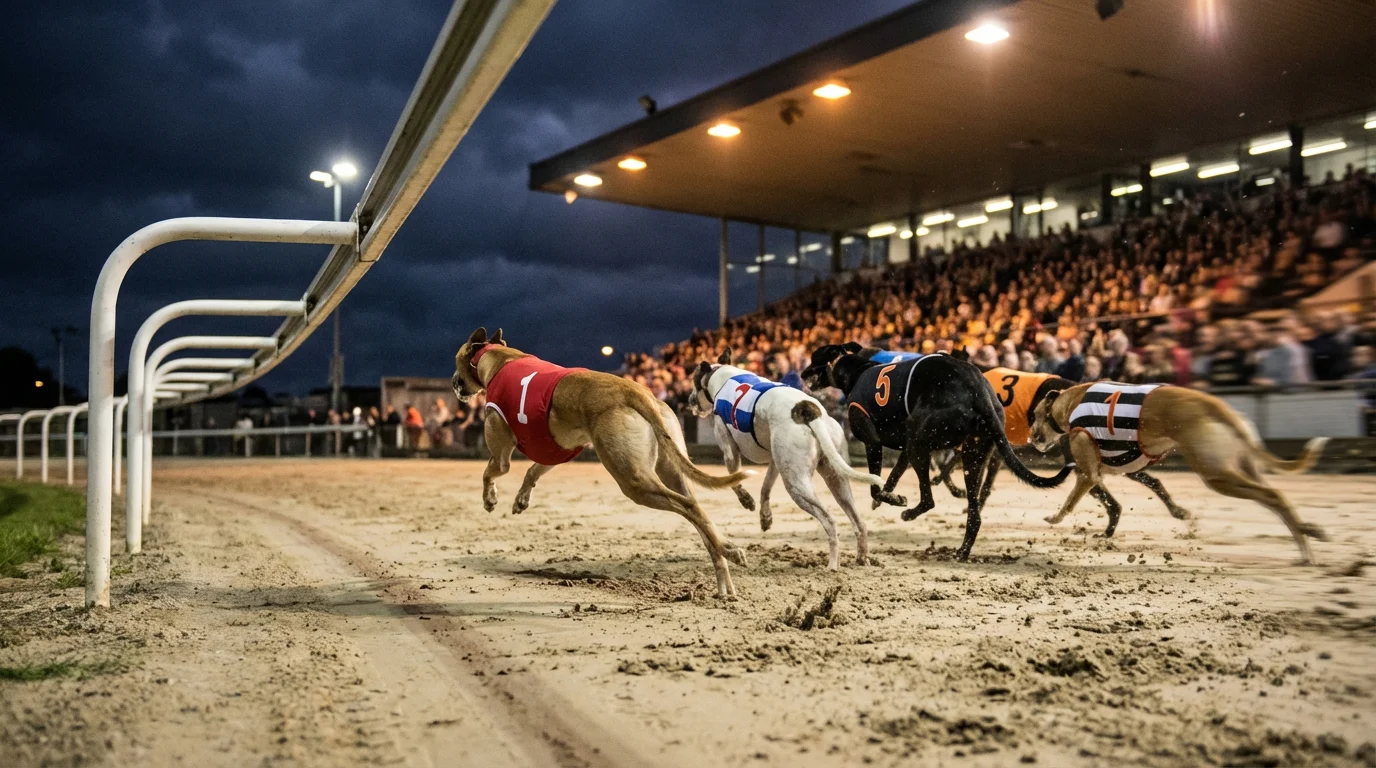
Monmore hosts five major annual competitions, each with distinct distance and grading requirements.
Ladbrokes Gold Cup
The showpiece. Run over 480 metres in open class, the Ladbrokes Gold Cup is Monmore's most prestigious race and the one that draws the highest-quality field. The prize fund runs into four figures, and entries come from leading kennels across the Midlands and beyond. The Gold Cup is typically staged as an evening event with full RPGTV coverage, and the betting interest reflects its status — markets open earlier and are deeper than for standard graded racing. Results from the Gold Cup often feature names that appear in the upper echelons of national greyhound form, making the race a useful benchmark for assessing how Monmore's best dogs compare with runners from other major venues.
Ladbrokes Puppy Derby and Other Events
Not to be confused with the national Puppy Derby staged at Towcester, the Ladbrokes Puppy Derby at Monmore is a track-level competition for younger dogs that serves as a showcase for emerging talent. Run over the standard 480-metre distance, it attracts entries from trainers looking to develop their more promising juveniles in a competitive but Monmore-specific context. The results from the Puppy Derby are particularly valuable for identifying dogs that may progress rapidly through the grading system in subsequent months.
Beyond the Gold Cup and Puppy Derby, Monmore's race programme includes the Trafalgar Cup, the oldest puppy competition in the greyhound racing calendar, first contested at Wembley Stadium in 1929 and hosted at Monmore Green since 2015, plus seasonal events such as the Summer Stayers Classic over staying distances and invitation stakes that bring together qualifiers from preliminary rounds. Each of these events enriches the results archive and provides data points that are more informative than the regular graded card because of the elevated quality of the fields.
FAQ: Monmore Greyhound Racing
What days does Monmore Green race and what are the meeting times?
Monmore Green races four or more times per week throughout the year. The standard schedule includes BAGS afternoon meetings on selected weekdays, with first races typically going off between 11:00 and 13:30, and evening meetings that usually start between 18:30 and 19:15. The specific race days vary by week depending on the GBGB fixture calendar, which is published in advance on the GBGB website. Evening meetings are broadcast via Racing Post Greyhound TV and SIS. The most reliable way to confirm today's card is to check the GBGB fixture list or any major racecard provider on the day.
Which trap has the best win rate at Monmore?
Trap 1 consistently records the highest win rate at Monmore across the standard 480-metre distance. The inside draw benefits from the 103-metre run to the first bend, which gives inside-drawn dogs a shorter path through the opening turn. Trap 2 also outperforms the statistical average. The advantage is most pronounced in sprint races over 264 metres, where the shorter total distance amplifies the first-bend advantage. However, trap bias is a statistical tendency, not a rule. Wide-running dogs drawn in trap 6 still win regularly, and the interaction between running style and draw is more important than the raw trap number alone. Always assess the draw in the context of each dog's preferred racing line.
What distances are raced at Monmore Green and what are the track records?
Monmore Green offers racing over six distances: 264 metres (sprint, two bends), 480 metres (standard, four bends), 630 metres (middle distance, five bends), 684 metres (middle distance, six bends), 835 metres (staying, seven bends), and 900 metres (marathon). The 480-metre standard distance accounts for the majority of races and is the basis for the grading system. Track records vary by distance and are updated when faster times are recorded under standard going conditions. Current records can be checked through the GBGB results archive or specialist data services such as Timeform, which maintain historical performance data for all licensed UK tracks.
The Last Bend: What Monmore Results Actually Tell You
Results are the scoreboard, not the game. A Monmore result tells you who finished where, how fast, and from which trap, but it does not tell you why. The why is buried in the sectional times, the running comments, the grade context, the going report, the trap draw, and the pattern of results that preceded this one. A single result is a data point. A sequence of results, read with the analytical framework this guide describes, is information. The distinction matters because punters who react to single results — chasing last night's winner, dismissing last night's beaten favourite — are always one step behind the market.
The best use of Monmore results data is not to predict winners but to eliminate losers. If a dog's sectional times show it lacks early pace, you can rule it out in races where the trap draw demands it. If the going report says slow and a dog needs fast ground, the result from that meeting is less relevant than its form on a standard surface. If a trainer's kennel is in a cold spell, factor that into your assessment even if the individual dog's form looks strong. Each piece of data narrows the field, and in a six-dog race, narrowing the field from six live chances to three or four is a meaningful analytical achievement.
Monmore will keep racing, and the data will keep accumulating. The 419-metre oval on Sutherland Avenue produces hundreds of results per month, and every one of them adds to the picture. Use this guide as a reference for reading that picture — the racecard structure, the distance profiles, the trap biases, the odds mechanics, the form patterns, the going adjustments — and apply it not as a formula but as a framework for thinking about what the numbers mean. The traps open four nights a week. The form is there for anyone willing to read it properly.
