 Monmore dogs
 Greyhound Racing Going Conditions Explained
 Available in US
Going conditions in greyhound racing explained. How weather affects the Monmore sand track, reading going reports, and adapting your selections to fast or slow conditions.
What Are Going Conditions in Dog Racing?
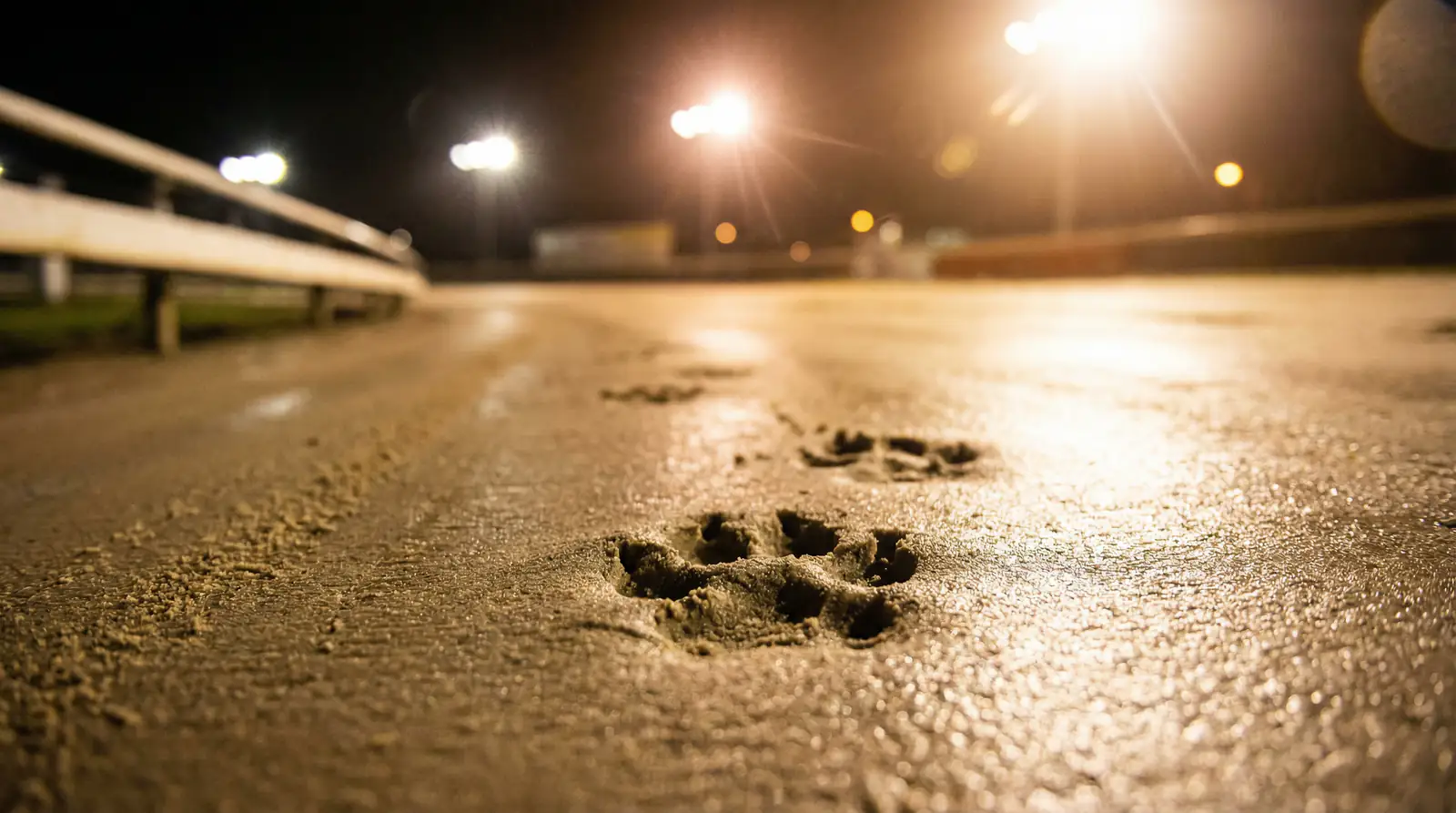
The going describes the surface state on race night. In horse racing, the going is a familiar concept — firm, good, soft, heavy — reflecting how the turf rides under the horses’ hooves. In greyhound racing, the same principle applies but to a sand-based all-weather surface. The going at Monmore indicates whether the track is running fast, standard, or slow, based on the moisture content and compaction of the sand.
Unlike turf, which can transform from firm to waterlogged in a single rainstorm, Monmore’s sand surface changes more gradually. The track’s drainage system handles moderate rainfall without dramatic shifts in the going, and the ground staff manage the surface between meetings through harrowing and watering to maintain consistency. But the going does change — with weather, with season, with the number of races that have been run on it since the last maintenance cycle — and those changes affect race times and, more importantly, the relative performance of individual dogs.
The going is typically described in qualitative terms — fast, standard, slow — rather than with a precise numerical scale, though some platforms use going allowances expressed in hundredths of a second to quantify the effect. A going allowance of -10, for example, means the track is running 0.10 seconds faster than standard. An allowance of +20 means it’s 0.20 seconds slower. These allowances are used by form analysts, particularly at Timeform, to adjust raw finishing times into standardised figures that can be compared across different meetings.
For punters, the going is not just a background condition — it’s a variable that can favour or disadvantage specific dogs depending on their running style, their physical build, and their demonstrated preferences. Ignoring the going is like ignoring the weather forecast before an outdoor event: you might get away with it most of the time, but the nights when it matters will cost you.
How Weather Affects the Monmore Sand Track
Rain compacts the surface. Sun dries and loosens it. That simplified version of the relationship between weather and going at Monmore captures the essential dynamic, though the reality involves a few more variables than sunshine and showers.
Heavy or sustained rainfall increases the moisture content of the sand surface, making it denser and heavier underfoot. Dogs running on wet sand exert more energy with each stride because the surface doesn’t yield as cleanly as dry sand. The result is slower finishing times across the card — not because the dogs are slower, but because the surface is absorbing more of their effort. A dog that runs 29.00 on standard going might run 29.30 or 29.40 on the same night if heavy rain has fallen in the hours before the meeting.
Dry weather, particularly extended dry spells in the summer, produces faster going. The sand loosens, the surface compaction decreases, and dogs move through it with less resistance. Fast going at Monmore produces the quickest times of the year and is the condition under which track records are most likely to be threatened. Summer evening meetings in June, July, and August, after a dry week with no significant rainfall, are the likeliest settings for fast going.
Wind affects the going indirectly by accelerating evaporation from the surface. A windy, dry day can transform yesterday’s standard going into tonight’s fast going. Wind also affects the dogs directly — a headwind on the home straight slows finishing times, while a tailwind can marginally quicken them — but the surface effect is more consistent and more measurable.
Temperature matters at the margins. Freezing conditions can harden the surface in unpredictable ways, though GBGB safety standards mean meetings are abandoned if conditions become dangerous. Very hot weather can dry the surface so thoroughly that it becomes dusty and loose, which some dogs handle better than others. The temperate British climate means extreme conditions are rare, but the moderate fluctuations between spring, summer, autumn, and winter produce enough going variation to affect form assessment throughout the year.
Reading Going Reports for Monmore
The going is posted before the first race. At Monmore, the going report for each meeting is determined by the racing office based on a combination of surface inspection, recent weather, and sometimes the results of early races on the card which serve as a real-time indicator of how the track is riding.
Going reports are published on racecard platforms — Timeform, At The Races, bookmaker sites — typically alongside the racecard data for the meeting. The report might read “standard” for a typical evening, “fast” after a dry spell, or “slow” following rain. Some platforms use more granular descriptions: “standard to slow,” “standard to fast,” or specific going allowances that quantify the deviation from normal.
The going report applies to the meeting as a whole, but the surface can change within a meeting. An evening card that starts on standard going might shift to slow if rain begins during the programme, and early-race dogs will have run on different going than late-race dogs. Experienced punters at the track can observe the going for themselves — watching how the dogs move on the surface, noting whether finishing times are quickening or slowing as the card progresses — but remote bettors must rely on the published report and any updates that platforms provide between races.
Using the going report effectively means comparing it to the conditions under which each dog has previously performed. The form guide tells you what a dog ran in terms of time and position; the going report tells you the context. A dog that ran 29.10 on slow going has produced a better performance than a dog that ran 29.10 on fast going, because the slow surface made the time harder to achieve. Adjusted times, as published by Timeform, factor this in automatically. For punters using raw times, the going report is the manual adjustment that keeps the comparison honest.
Adapting Your Selections to Conditions
Some dogs are mudlarks. Others need it fast. The going preference of individual greyhounds is real, observable, and relevant to betting — though it is less dramatic than in horse racing, where the difference between firm and heavy ground can transform a champion into an also-ran.
Dogs that perform well on slow or heavy going tend to share certain physical traits: they’re often heavier, more powerfully built, and less reliant on pure speed than on strength and stamina. Their action is efficient on a surface that saps energy — they don’t fight the going, they work through it. At Monmore, these dogs come into their own on wet winter evenings when the sand is holding moisture and the times across the card are two or three tenths of a second slower than standard.
Dogs that prefer fast going are typically lighter, quicker out of the traps, and more dependent on the surface allowing them to hit top speed early. When the going is fast, these dogs can produce finishing times that flatter their ability, because the surface is actively helping them run fast. When the going turns slow, the same dogs may struggle because their natural stride — long, flat, speed-dependent — is less efficient on a surface that demands more power per stride.
Identifying a dog’s going preference requires looking at its form across different conditions. If a dog has run five times on fast going with an average finishing position of 2.0, and five times on slow going with an average of 4.5, the preference is clear. Most dogs fall somewhere in the middle — performing acceptably across a range of conditions without a dramatic preference — but the ones with a pronounced bias are the dogs where the going report becomes a primary selection factor rather than a secondary one.
The practical discipline is straightforward: check the going before making your selections, and cross-reference it against each dog’s demonstrated performance under similar conditions. On nights when the going is notably fast or notably slow — deviating from the standard by more than 0.15 seconds in either direction — the dogs with a demonstrated preference for that going gain an edge that the raw form figures don’t fully capture. On standard going, the effect is minimal, and you can rely more heavily on form, trap draw, and grade without adjusting for conditions. The going matters most at the extremes, and the punters who pay attention to it are the ones who avoid the costly surprises that extreme conditions produce.
Understand going conditions on the monmoredogsresults homepage.
See how going affects sectional times in sectional times.
