 Monmore dogs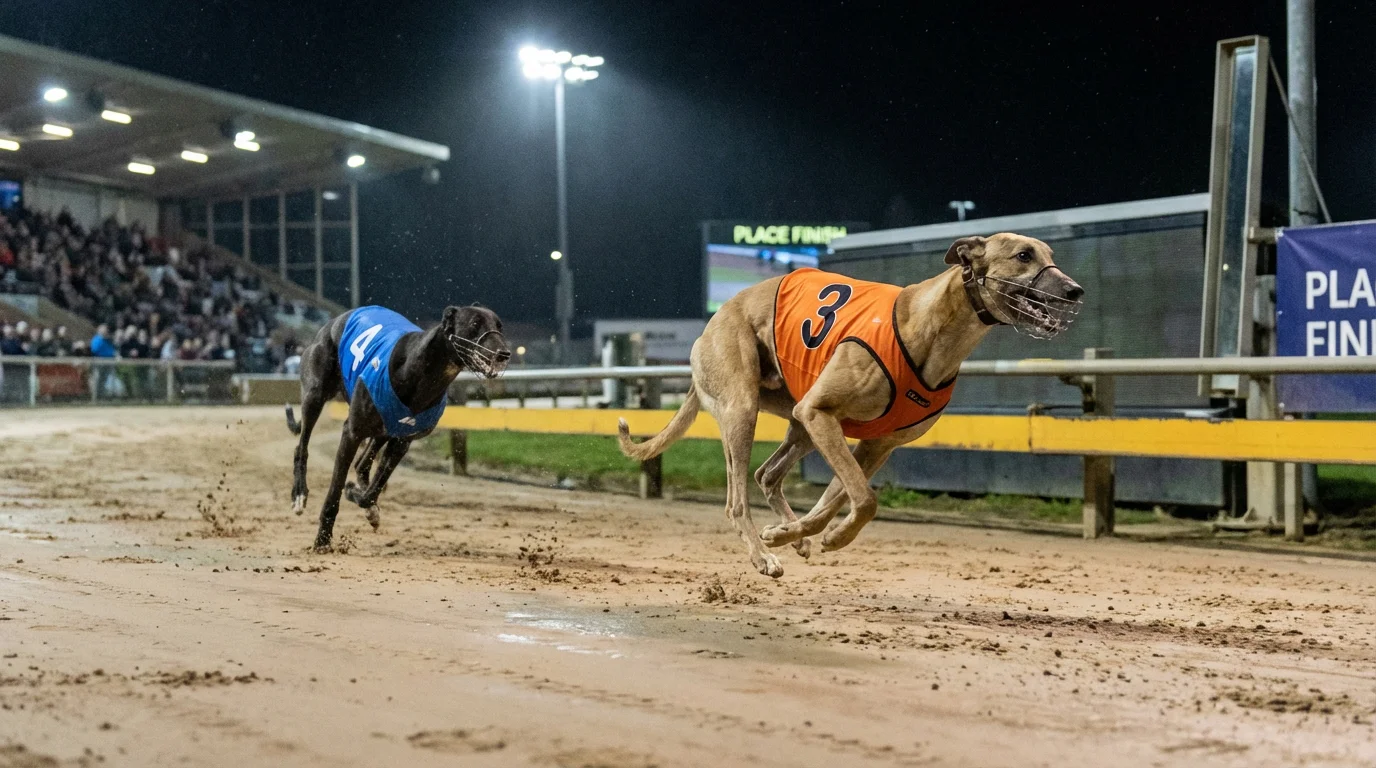
Best Greyhound Betting Sites – Bet on Greyhounds in 2026
Loading...
How Each-Way Bets Work in Dog Racing
Two bets in one: win and place. An each-way bet is not a single wager — it’s a pair. Half your stake goes on the dog to win the race, and the other half goes on the dog to finish in a place position. If the dog wins, both parts pay out. If the dog finishes second or third but doesn’t win, the win part loses and the place part collects. If the dog finishes outside the places, you lose both stakes.
In a standard six-runner greyhound race at Monmore, the place terms are typically the first two finishers at one quarter of the win odds. So if you back a dog each-way at 8/1 with a total stake of two pounds — one pound on the win, one pound on the place — and the dog finishes second, you lose the win stake but your place bet returns at 2/1, giving you three pounds back from a two-pound total outlay. A net profit of one pound, despite your dog not winning.
The mechanics are straightforward, but the strategic implications are more nuanced than they first appear. Each-way betting is essentially a hedge: you’re sacrificing some potential return in exchange for a broader coverage of outcomes. If the dog wins, you collect less than a straight win bet of the same total stake would have returned, because half your money was on the place portion at reduced odds. The trade-off is that you also collect if the dog places, which a win-only bet would not.
For Monmore races specifically, the six-runner field size means each-way terms are tighter than in horse racing, where larger fields often come with more generous place fractions. With only six runners, two place positions, and one-quarter odds, the each-way bet at the dogs is a different proposition from an each-way bet on a 20-runner handicap at Ascot. The maths is less forgiving, and the value case needs to be stronger.
Each-Way Terms at UK Bookmakers
One-quarter odds for a place finish in a six-runner field. That’s the standard each-way offer at most UK bookmakers for greyhound racing, and it applies across the board to Monmore meetings whether you’re betting on a Monday afternoon BAGS race or a Saturday evening open event.
The place fraction is the critical variable. At one-quarter odds, a dog priced at 8/1 returns 2/1 for a place. A dog at 4/1 returns evens. A dog at 2/1 returns 1/2. As the win odds get shorter, the place return shrinks proportionally, and at some point the each-way bet becomes mathematically uninteresting. A 6/4 favourite backed each-way returns just 3/8 for a place — 37.5 pence for every pound staked on the place portion. You’d need to be very confident the dog can’t win but will definitely place to consider that worthwhile, and at that point you’d be better off with a straight place bet if available.
The number of places paid is also important. Standard greyhound each-way terms cover two places in a six-runner field. Some bookmakers offer enhanced place terms as promotions — three places in a six-runner race, for example, or one-third odds instead of one-quarter. These enhanced terms significantly improve the each-way value equation and are worth seeking out when available. The difference between two places and three in a six-dog race is substantial: with three places, your place bet has a 50% chance of landing based on random distribution alone, compared to roughly 33% with two places.
Tote each-way bets operate slightly differently. The place portion of a tote each-way bet is settled at the tote place dividend, which is determined by the pool rather than by a fixed fraction of the win odds. On evenings where the tote pool is large and well-distributed, the tote place dividend might be better or worse than the bookmaker’s one-quarter odds. There’s no way to predict which will pay more, but experienced each-way bettors often compare the bookmaker and tote returns for recurring patterns at Monmore.
When Each-Way Offers Value at Monmore
The maths favours each-way when the favourite is short and your selection is at a longer price. That’s the core each-way value scenario, and it applies consistently at Monmore across both afternoon and evening meetings.
Consider a race where the favourite is priced at 4/6 and your selection is at 6/1. A straight win bet on your dog at 6/1 returns seven pounds to a one-pound stake if it wins and nothing if it doesn’t. An each-way bet at the same total stake — one pound to win, one pound to place — returns seven pounds on the win portion plus 2.50 pounds on the place portion if the dog wins (total 9.50 from a two-pound stake). If it finishes second, you get 2.50 pounds back, losing just 50 pence net. The each-way structure has given you meaningful coverage against the second-place finish at a relatively small cost to your overall return.
The value case weakens when your selection is itself a short-priced runner. Backing a 2/1 shot each-way in a six-runner race produces a place return of just 1/2. If the dog places but doesn’t win, you get 1.50 pounds back from a two-pound total stake — a net loss of 50 pence. The coverage is minimal, and you’d have been better off with a straight win bet that concentrated your stake where the return is meaningful.
At Monmore, each-way value tends to be strongest in higher-grade evening races where one or two dogs are heavily fancied and the market is polarised. A race with a 1/2 favourite and several runners between 5/1 and 10/1 is fertile ground for each-way betting on the longer-priced contenders. The favourite may well win, but if it doesn’t, the runner-up is likely to be one of those mid-price dogs — and the place return at one-quarter of 6/1 or 8/1 is substantial enough to make the bet worthwhile even if your selection can’t quite land first.
Lower-grade BAGS races at Monmore present a different picture. The form is less reliable, the finishing order more random, and the prices less polarised. In an A8 afternoon race where all six dogs are priced between 2/1 and 7/1, the each-way maths doesn’t produce the same clear value, because the place odds on any selection are relatively short and the likelihood of accurately identifying the place finishers is no better than average.
Each-Way vs Win-Only: The Trade-Off
Coverage costs. Is it worth the premium? That question sits at the heart of every each-way decision, and the honest answer is: sometimes yes, sometimes no, and always dependent on the specific race.
The cost of each-way coverage is the margin you sacrifice on the win return. If you have two pounds to bet, a win-only bet puts the full two pounds on your selection at the win price. An each-way bet splits that into one pound to win and one pound to place. If the dog wins at 8/1, the win-only bet returns 18 pounds. The each-way bet returns 8 pounds from the win portion plus 3 pounds from the place portion — 11 pounds total. You’ve given up 7 pounds of potential profit in exchange for the safety net of a place return. That safety net is only valuable if the dog has a realistic chance of placing without winning, and if you believe the place probability justifies the seven-pound sacrifice.
Win-only betting is the cleaner approach when you have strong conviction. If your analysis clearly identifies a dog as the most likely winner — superior form, favourable trap, suited to the distance and going — then concentrating your stake on the win maximises the return from your insight. The place portion of an each-way bet, in that scenario, is a hedge against a risk you don’t consider likely.
Each-way works best as a strategy for dogs that you rate highly but that face one or two superior rivals. The dog you’d rank second or third in the race — strong enough to be competitive, but facing a short-priced rival that’s probably better. In that situation, the place return provides a positive expectation even if the win is unlikely. The dog doesn’t need to beat the favourite; it just needs to finish in the first two.
The long-term consideration is bankroll management. Win-only betting produces more volatile results — bigger wins, bigger losses, longer losing runs. Each-way betting smooths the variance, providing more frequent returns of smaller amounts. For punters with smaller bankrolls who can’t afford extended losing streaks, each-way betting offers a more sustainable structure. For punters with larger bankrolls and higher risk tolerance, win-only betting captures more value from correct assessments. Neither is objectively superior. The right choice depends on your bankroll, your confidence in each specific selection, and your tolerance for the losing runs that both approaches inevitably produce.