 Monmore dogs
 Monmore Dogs Results Today: How to Check Latest Races
 Available in US
Find today's Monmore greyhound results fast. Where to check latest race data, what each result line contains, and how to use today's results for tomorrow's betting.
Where to Find Today’s Monmore Results
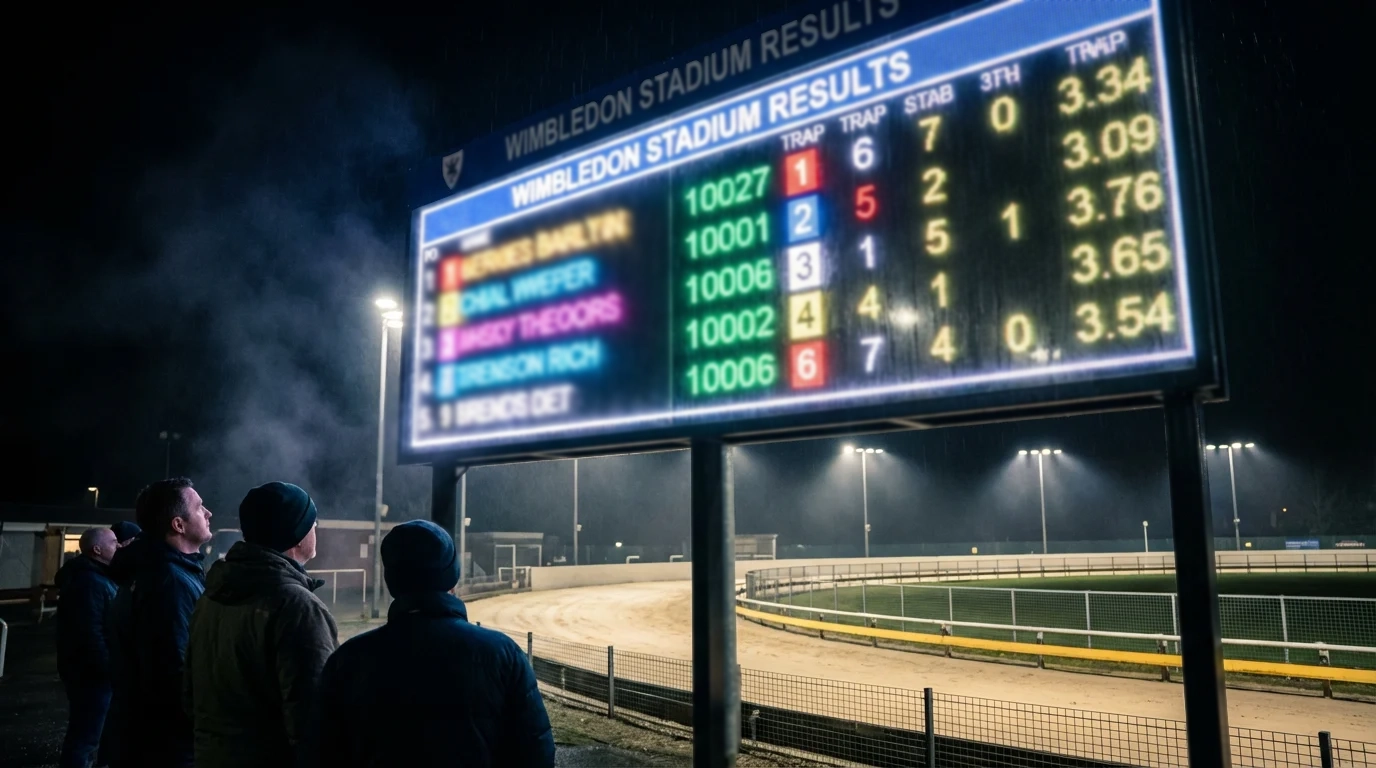
The race finished 90 seconds ago, and you need to know what happened. Maybe you had money on Trap 3, maybe you’re scouting form for Saturday’s evening card, or maybe you just want to confirm what you thought you saw on the SIS stream before the camera cut away. Whatever the reason, Monmore dogs results today are available across several platforms, each with a slightly different speed and depth of information.
The fastest route is usually the Greyhound Board of Great Britain website. The GBGB publishes official results from all licensed UK tracks, and Monmore data typically appears within minutes of a race finishing. The official Monmore Green Stadium site at monmoregreyhounds.com hosts its own results section with race and trial results, and also links outward to GBGB data. For punters who want results bundled with racecards and form, At The Races and Timeform are the two heaviest hitters. Timeform’s greyhound section publishes both fast results and full results with commentary, and their coverage of Monmore meetings is consistent across both afternoon BAGS fixtures and evening cards.
If you’re betting through an online bookmaker, many of the major UK-licensed operators — Ladbrokes, Bet365, William Hill, Betfair — carry SIS-streamed results within their greyhound sections. These tend to update in near-real time, particularly for races broadcast through SIS. Since Monmore’s deal with Sports Information Services (SIS) covers every racing day, this means results from Monday afternoon through Saturday night are pushed to bookmaker platforms almost instantly.
Oddschecker aggregates results alongside its odds comparison tools, and for those who want raw data without editorial dressing, BetsAPI and Racing and Sports both maintain Monmore results databases that update with minimal delay. The Greyhound Recorder, an Australian-based service, might seem like an odd choice for a Wolverhampton track, but their Monmore archive includes sectional times and running positions that some UK-focused platforms omit.
The key variable is not which platform you choose, but what you need from the result. If all you want is the winner and the SP, any of these sources will do. If you want sectional splits, running comments, and calculated times, you need to be more selective. That distinction matters more than it might seem, and it shapes everything that follows.
What Each Result Line Contains
Position, trap, time, SP — in that order. That’s the skeleton of every Monmore result line, and once you learn to read it fluently, a wall of numbers becomes a compressed narrative of what happened in 28 seconds of racing.
The finishing position is self-explanatory: 1st through 6th, with the winner at the top. Next to each dog’s name you’ll see the trap number they started from, colour-coded on most platforms — Trap 1 is red, Trap 2 blue, Trap 3 white, Trap 4 black, Trap 5 orange, and Trap 6 black-and-white stripes. This isn’t cosmetic detail. The trap number tells you where the dog started relative to the rail and the first bend, and at Monmore, where the first bend arrives after 103 metres, that starting position can be the difference between a clean run and early crowding.
The finishing time is recorded in seconds and hundredths — so a standard 480-metre race might show 29.12 or 28.87. That time is measured from the moment the traps open to the moment the first part of the dog crosses the finish line. What it doesn’t tell you is the going, the wind, or whether the dog was bumped at the second bend. For that, you need the run comment, which full results platforms include as a short abbreviation string: things like “EP,Led1” (early pace, led from the first bend) or “SAw,Bmp2” (slow away, bumped at the second bend).
The Starting Price, or SP, represents the final odds on the dog at the moment the traps opened. It’s the price you’d have received if you took SP rather than an early or fixed price. Alongside the SP, most result cards show the Computer Straight Forecast return — the official payout for correctly predicting the first two dogs in order — and the tricast return for predicting the first three. These figures are useful for gauging how predictable the race was. A low CSF return usually means the market favourites filled the top spots. A CSF over 100 suggests the result caught the market off guard.
Some platforms also include the dog’s weight at weigh-in, the trainer’s name, and the calculated going allowance. On Timeform, you’ll find an adjusted time that factors in early pace, going, and interference — a more useful comparison tool than the raw clock. Not every results service provides all of these fields, which is exactly why the distinction between fast results and full results matters.
Fast Results vs Full Results: The Difference
Fast results give you the headline. They appear within seconds of the race finishing, often before the official photo-finish confirmation, and they contain the bare minimum: finishing order, trap numbers, winning time, and SP. On a platform like Timeform, the fast result is designed for punters who need to know immediately whether their bet landed. It is not designed for analysis.
Full results arrive later, usually within 15 to 30 minutes of the race, and they carry significantly more information. The full result includes run comments for every dog, sectional times where available, the forecast and tricast dividends, weight data, and sometimes a brief analytical note from the platform’s correspondent. On Timeform, the full result also carries an adjusted time — a figure that compensates for going conditions, interference, and other variables that distort the raw clock.
For punters who are only interested in settling a bet, fast results are sufficient. You backed Trap 5 to win, and you either see it in first place or you don’t. The SP confirms the price, the winning time is noted, and you move on to the next race. But for anyone using results as form data — which is what separates recreational betting from informed betting — the full result is indispensable.
Consider the difference between these two scenarios. Fast result: Trap 2 wins at 29.15, SP 3/1. Full result: Trap 2 wins at 29.15, led from the first bend, eased down in the final 50 metres, weight 31.2kg, trainer Kevin Hutton, CSF 8.42, going allowance -10. The full result tells you the dog led throughout and was never challenged, that the time was actually faster than it looks once the going is factored in, and that the CSF was low — meaning the market expected this outcome. That’s a completely different picture from the bare numbers.
The practical advice is straightforward: use fast results for immediate confirmation, but always revisit the full results before using any race as form data. The raw time is a headline. The full result is the article. And if you’re building a picture of a dog’s trajectory — perhaps deciding whether to back it next time it appears on the Monmore card — skipping the full result is like reading the score without watching the match.
Using Today’s Results for Tomorrow’s Bets
Today’s finishing time becomes tomorrow’s form figure. That’s the fundamental connection between checking results and placing better bets, and it applies whether you’re watching a Monday afternoon BAGS fixture or a Saturday night open race.
The first thing to extract from today’s results is run style. Did the dog lead early and fade? Did it come from behind? Was it hampered at the first bend and still finished third? Run comments answer these questions in compressed form, but the answers shape how you evaluate that dog the next time it runs. A dog that showed strong early pace from Trap 4 today might be a stronger proposition next week if drawn in Trap 1, where the inside rail gives it a shorter path to the first bend.
The second valuable data point is time in context. A raw finishing time of 29.30 over 480 metres tells you very little on its own. But if you know that three other races on the same card returned times around 29.50, and the going was reported as slightly slow, then 29.30 starts to look genuinely quick. Cross-referencing a dog’s time against the card average is one of the simplest and most effective methods for identifying above-average performances that might not be reflected in the SP.
Trainer patterns are another element that today’s results can reveal. If you notice that the same kennel has placed three dogs in the first two over the past two meetings, that’s not random. Trainers at Monmore — and at any licensed UK track — operate in cycles. A kennel in form tends to stay in form for weeks, not days. Tracking these runs by trainer name across multiple result cards can give you an edge that individual dog form alone cannot.
Weight fluctuation is a more subtle indicator. Most full results include the dog’s weigh-in figure, and while a single number means nothing in isolation, a trend over three or four races can be significant. A dog that has dropped half a kilogram over its last three runs might be peaking in fitness. A dog that has gained a full kilogram might be carrying extra condition — not ideal for a sprint over 264 metres.
The practical discipline here is simple: don’t just check results to see who won. Check results to build a rolling picture of the dogs, trainers, and conditions at Monmore. Each race card is a data release. The punters who treat it that way — filing observations, noting run styles, comparing times against the card average — are the ones who make more informed selections when the same dogs reappear on Thursday or Saturday. Today’s results are not the end of the process. They are the raw material for the next decision.
Check today’s Monmore dogs results on the monmoredogsresults homepage.
Find yesterday’s results and archive in greyhound results.
